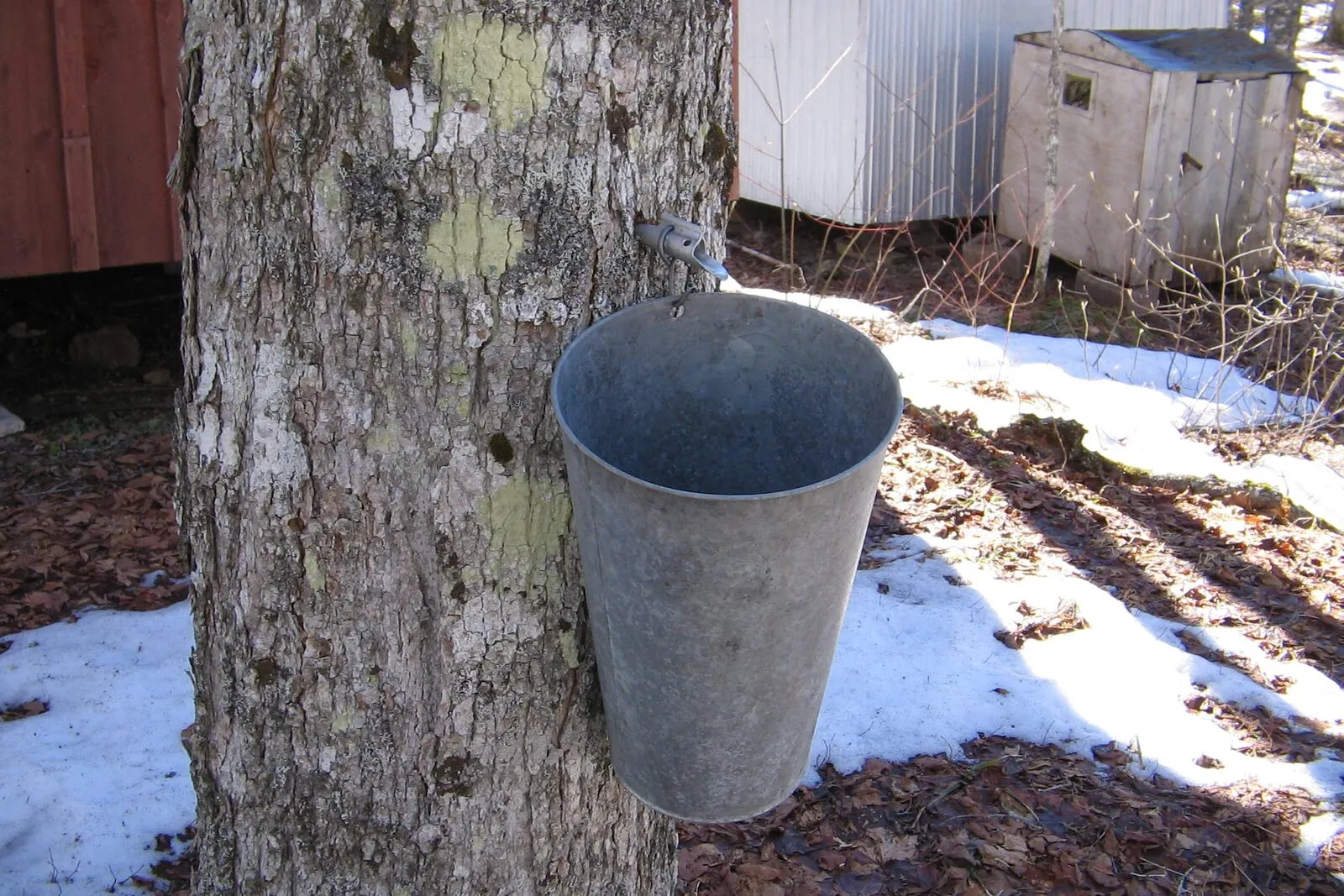
By early March most of the Valley is still mud and old snow, but on the hill-town ridges the sugar maples are running. For about six weeks (roughly from the last week of February through late March), nights freeze, days thaw, and sap moves up and down the trunks of the trees that have been tapped. That’s the cue for sugarhouses across Franklin and Hampshire counties to fire up their evaporators, open their doors on weekends, and serve pancakes with syrup that, in many cases, was boiled the same morning.
A sugarhouse weekend is one of the better ways to spend a March Saturday in the Pioneer Valley. The hill towns are quiet that time of year, the drives are pretty in a stark, end-of-winter way, and the combination of a wood fire, a cloud of sweet steam, and a stack of pancakes is hard to beat after a long winter.
When to go
The maple-sugaring season in Massachusetts runs roughly from late February through late March, depending on the weather. Sap flow needs the freeze-thaw cycle of below-freezing nights and above-freezing days. Most sugarhouses in the Valley operate weekends through that window and close up by early April.
The high point of the season is Massachusetts Maple Weekend, an annual statewide open-house event organized by the Massachusetts Maple Producers Association (MMPA). The exact date shifts with the calendar (it has fallen anywhere from the first weekend of March to the last), and dozens of sugarhouses across the state participate. Check the MMPA site each February for the current year’s date and the list of participating producers.
It’s worth knowing that sugaring is weather-dependent. A mild winter can compress the season; a long cold spell can push it later. Sap-to- syrup ratio is roughly 40 to 1, so the boiling never stops while the sap is running.
How sugarhouse visits work
A sugarhouse on an open weekend in March is a small operation running at full speed. Walking in, you typically find a low building with a tin roof, a long flat evaporator pan over a wood fire, and a cloud of sweet steam pouring out of a roof vent. Visitors are usually welcome to stand at the rail and watch the boil. The sap comes in from a tank or a network of plastic tubing from the sugarbush outside, moves through the evaporator pans, concentrates as the water boils off, and finally draws off as syrup at the far end.
Many of the Valley’s sugarhouses also run a small breakfast restaurant during the season, serving pancakes, waffles, French toast, or sausage with their own syrup. Hours are usually weekend mornings only, and waits can be long on Maple Weekend or on a sunny March Saturday. Go early, or be prepared to put your name on a list and walk around the sugarbush while you wait.
Almost every sugarhouse has a small retail counter where you can buy syrup, maple cream, maple sugar, candy, and (often) maple-glazed doughnuts. Syrup is graded by color and flavor. Early-season syrup tends to be lighter and more delicate; later in the season it darkens and gets a stronger, more caramelized flavor. A taste off a wooden stir stick is one of the simple pleasures of a sugarhouse stop.
Where to go
The thickest concentration of sugarhouses in the Pioneer Valley is in the hill-town belt that runs across northern Franklin County and the western edge of Hampshire County: roughly Shelburne, Buckland, Conway, Ashfield, Heath, Hawley, Charlemont, Plainfield, Cummington, Worthington, Goshen, and Williamsburg. There are also operations down on the Valley floor in Deerfield and out east in Wendell and the North Quabbin towns.
A few of the long-established sugarhouses people often build a weekend around:
- Williams Farm Sugarhouse, in Deerfield on Greenfield Road. Five generations of the Williams family have been making syrup here, and the sugarhouse restaurant is open weekends through the season.
- Davenport Maple Farm, on Tower Road in Shelburne. A small family farm that has been in the same family since the early twentieth century, with a popular breakfast operation during sugaring season. (Gould’s Sugar House on Route 2 between Greenfield and Shelburne Falls, a long-running family sugarhouse known for its dining room, closed in 2020 after sixty years and as of recent reporting has no plans to reopen.)
Specifics (hours, menus, whether the restaurant is open in a given year) change from season to season. Before you set out, check the sugarhouse’s own website or, easier, the MMPA producer directory, which lists every member sugarhouse, what they make, and whether they welcome visitors.
Practical notes
- It’s mud season. Many sugarhouses sit at the end of a dirt road that’s frozen at sunrise and a soft trough by midday. A car with decent ground clearance is a help; four-wheel drive is rarely necessary but never wasted.
- Dress for cold and wet. A sugarhouse interior is warm and humid, but you’ll spend time outside on a slushy parking lot. Boots matter more than fashion.
- Mornings are best. Pancake breakfasts run out, lines build, and by mid-afternoon the wait can be an hour or more on a Maple Weekend Saturday. Aim to arrive when the doors open.
- Buy syrup before you leave. Prices at the sugarhouse are usually the best you’ll find anywhere, and many producers sell out their small-batch styles by the end of the season.
- Cash is still useful. Most sugarhouses now take cards, but small operations and farm-stand outposts sometimes don’t.