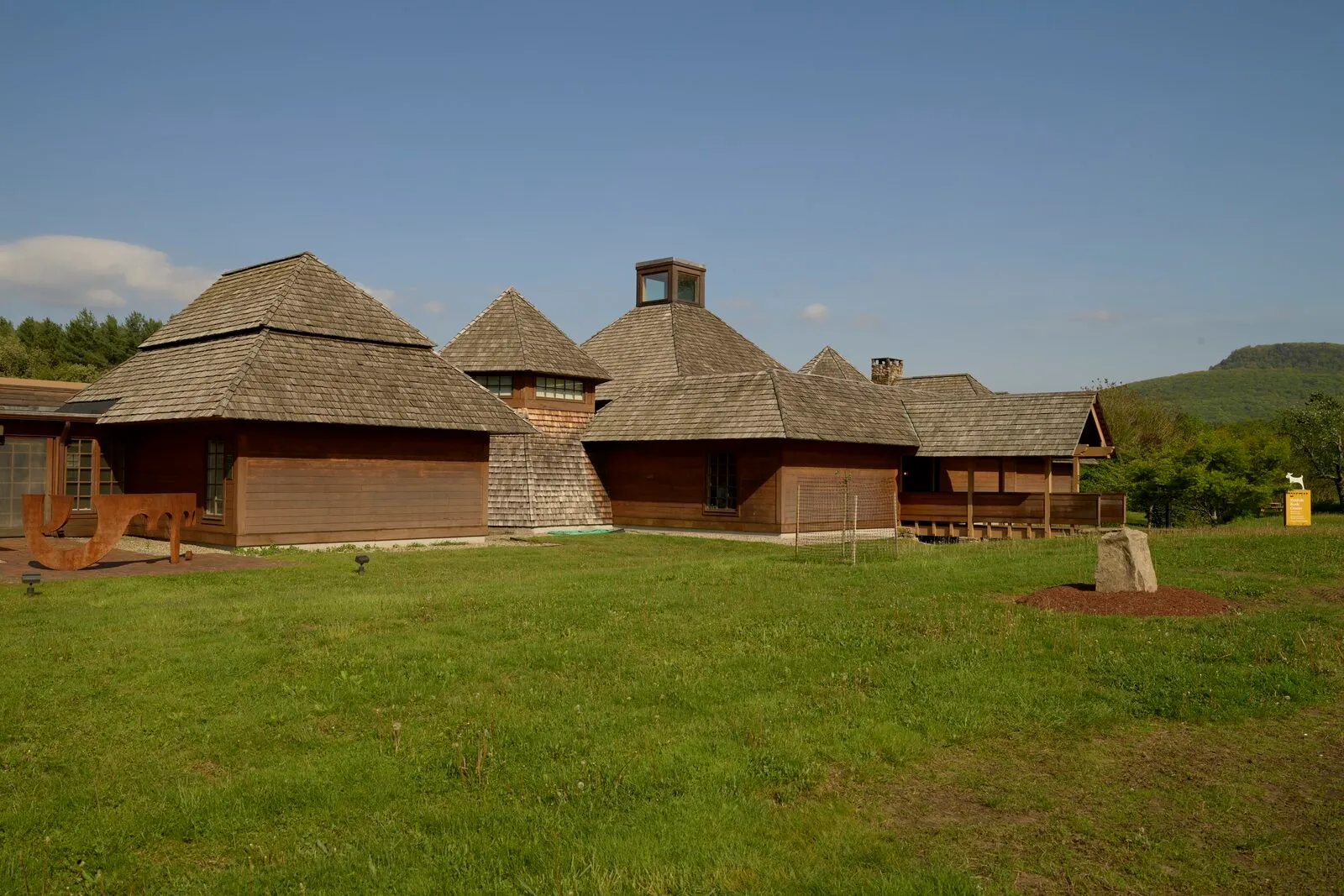
The Yiddish Book Center sits on the western edge of Hampshire College’s campus, just south of Amherst center on West Street. It is the largest Jewish cultural institution in New England and the only museum and research center anywhere focused on Yiddish, a living language and the literary and folk culture built in it across a thousand years of Eastern European Jewish life.
The center was founded in 1980 by Aaron Lansky, then a 24-year-old graduate student, who began collecting at-risk Yiddish books from attics, basements, and shuttered libraries. By the time Lansky retired as president in 2025, the center had recovered more than a million volumes and distributed copies to research libraries on six continents.
The building
The current building opened in 1997 on land donated by Hampshire College. Its design (a low cluster of wood-shingled volumes with pyramidal and conical roofs gathered around a central courtyard) deliberately echoes the rooflines of an East European shtetl, the small market towns where most of pre-war Yiddish literary life took place. The materials are plain: shingle, plank, and brick, set on a broad lawn open to the Holyoke Range.
What’s inside
The galleries hold a permanent exhibition, Yiddish: A Global Culture, that opened in October 2024 and traces a thousand years of Yiddish writing, theater, music, film, and political life. The Steven Spielberg Digital Yiddish Library has digitized more than 12,000 titles; the Wexler Oral History Project has recorded over 1,400 long-form video interviews with Yiddish speakers and their descendants. Yidstock, the center’s annual summer festival of new Yiddish music, draws performers and audiences from across North America and Europe.
Visiting
Admission is by suggested donation: $12 for adults, free for members, students, and children. The center is open Sunday through Friday, 10am–4pm, and closed Saturdays for Shabbat, with additional holiday closures on the program calendar. The visit is self-paced and a comfortable hour to half-day depending on whether you sit in for an oral history session or a gallery talk.