The Mead Art Museum is Amherst College’s teaching art collection: about 19,000 objects, free, open to anyone who walks in. It is named for William Rutherford Mead (Class of 1867), the partner in McKim, Mead & White whose family endowed the museum’s first building in 1949.
What’s there
The strengths of the collection are deliberately broad. American and European paintings form the largest holding, from Hudson River School landscapes through 20th-century abstraction. The Thomas P. Whitney collection of Russian art is one of the deepest holdings outside Russia, with over 250 paintings. Mexican and Central American ceramics, Tibetan thangkas, Japanese prints, and West African sculpture round out the non-Western galleries. A set of Assyrian palace reliefs from Nimrud, acquired by the college in 1857, are among the oldest ancient-Near-Eastern objects in any American college collection.
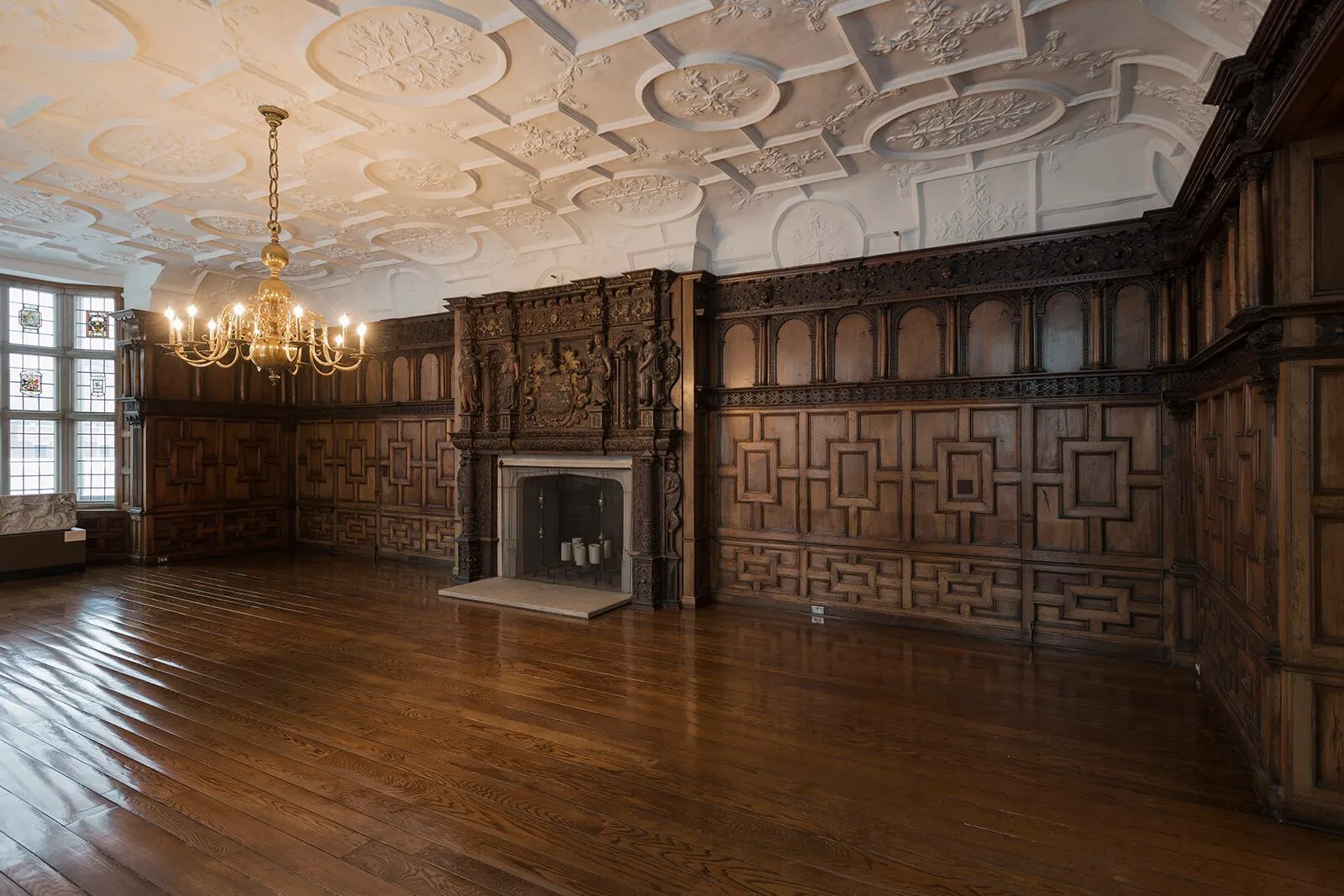
The museum’s most-photographed feature is the Rotherwas Room, a 1611 Jacobean oak-and-walnut paneled room from Rotherwas Court in Herefordshire, England, bequeathed to the college in 1945 and reinstalled at the Mead in full. The room is the centerpiece of the building and rotating exhibitions are sometimes staged inside it.
Visiting
Admission is free. The museum is generally open Tuesday through Sunday, 9 AM-5 PM, with Thursday hours extended to 10 PM, and follows the college’s holiday calendar; check the website for current hours. The galleries are a comfortable hour to half-day, and the museum is a short walk from the Beneski Museum of Natural History on the same campus and from the Emily Dickinson Museum in Amherst center.
The Mead is a member of Museums10, the consortium of museums on Five-College-area campuses; a single Museums10 visit also gets you the Smith College Museum of Art, the Mount Holyoke College Art Museum, and seven others.