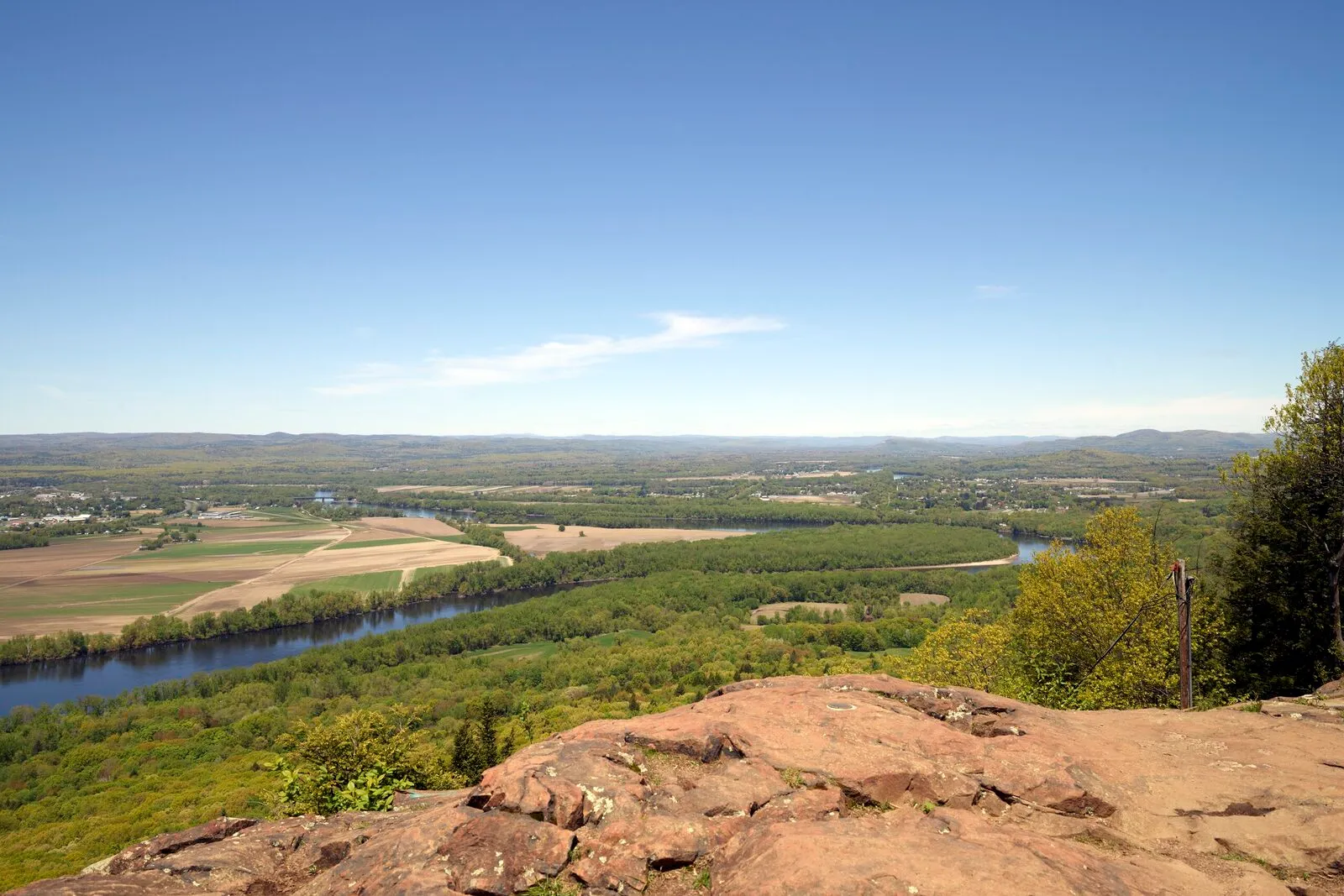
Montague Plains is a sand plain on an ancient glacial lake delta, one of the largest pitch pine and scrub oak barrens remaining in Massachusetts. The open, sandy habitat was historically maintained by wildfire; today MassWildlife and The Nature Conservancy use prescribed burns to keep the scrub oak from succeeding to closed forest and to preserve rare grassland and shrubland species.
Why it matters
Pitch pine–scrub oak communities are globally rare and host birds that don’t breed anywhere else in the region in numbers: grasshopper sparrow, vesper sparrow, prairie warbler, eastern whip-poor-will, and (historically) northern bobwhite. Late spring through early summer is the best window to hear whip-poor-wills at dusk along the access roads.
What to know
- Scale. 1,530+ acres, crossed by sandy woods roads that make for easy flat walking or biking.
- Hunting. The WMA is open to regulated hunting in season; wear blaze orange October through December.
- Burned sections. Patches that look charred are intentional. Recovery through scrub oak and low-bush blueberry is visible within a year or two.
- Public land rules. MassWildlife WMAs are free and open for walking, hunting, fishing, trapping, and wildlife viewing; trails are generally unmarked and parking lots are often unpaved.
- Nearest town. Access is off Route 63 in Montague.